In examining the hypodermic needle theory, referred to as a hypodermic-syringe model or magic bullet theory, I take a neutral stance. The hypodermic needle theory suggests an intended message sent by the media is directly and wholly accepted by the receiver Hypodermic.Needle.Model. As much as I want to admit there have been changes over the past decade in questioning the validity of media reporting and its effects on the public, I must also admit there is still a large amount of influence the media has on public perception.
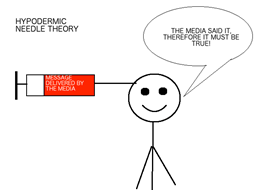
Nightengale.J.2020.Hypodermic.Needle.Theory
In today’s social and political environment, we witness many examples of the public responding to media reporting, especially right now during an election year. These responses include protests, reaction to COVID-19, political campaigns centered on personal attacks, organizations responding to social issues, etc. The media plays a major role in these reactions whether it is from television or radio broadcasting, social media, and movies and documentaries addressing social matters. The media’s influence is so instrumental in shaping perceptions and cultures that it has ignited wars and caused catastrophic events – view video below (3:59 mins).
Lopez.D.2015.Hypodermic.Neele.Theory
When analyzing various types of media influence, we should look beyond news reporting to other genres such as movies and games, as these media types also shape our cultures and perceptions about reality, particularly with children. There are scholars who believe mass communication no longer hold powerful effects over public perception as it did almost decades ago. They believe it is a combination of various forces at play. “Media effects are the result of a combination of forces, and the evolution of the theories, even at this early stage, shows how media scholars adapted to an understanding of the power of the message” Rosenberry & Vicker. 2017. We cannot deny there are various forces at play such as personal beliefs, values, and culture that shape a person’s perception of worldly views, yet, what’s equally true is that the media is a powerful influential force.
The question is, am I as vulnerable – and as likely to be affected – as the theory says, or resistant to media influence? In some ways, yes, I am vulnerable and affected as the theory says, particularly to topics and social matters that suit my personal interests and those that do not, I resist, but don’t we all?
 Mass Communications Theory - Education
