If success is to be achieve, agenda setting must be at the forefront of every newscast’s goal, especially in this new environment where citizen journalists are gaining momentum in the marketplace of attracting viewers. When thinking of the agenda setting process, keep in mind there are three components: priming, issue obtrusiveness, and framing. In framing, a journalist decides what information to include and what information to exclude from a report by framing a story or picture in the minds of the audience. This process involves careful selection of words, phrases, and images to use when writing a story. Priming involves the process by which the media ignores some issues and attend to others. This process affects the attention the public gives to the issue and how important it seems to the audience. Simply put, the media is not telling the audience how to think, but selecting which stories to publish nudges the audience to give attention to that story. Lastly, in issue obtrusiveness, the media selects which issue to bring before the public RosenberryVickers2017AgendaSettingTheoryProcess. For example, currently COVID-19 vaccination is a hot topic over climate change so it’s no surprise we are hearing and seeing more from the media on this topic. For more information on the agenda setting theory, check out this video below (2:20 minutes).
LambB2012The Agenda Setting Function Theory
In viewing a story from a local newscast, WSBTV Channel 2, the agenda setting attributes are noticeable. The story is pertaining to the urgency of voting in that it will make a difference between life and death. Would it really have that much impact? The headline reads ‘Life on the line: Early voters wait as long as it takes.’
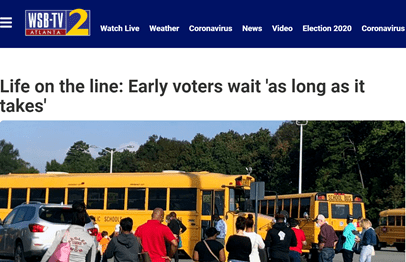
KellmanL2020Lifeontheline:Earlyvoterswaitaslongasittakes
In reading the article, I noticed the journalist framing the story before I finished it. The journalist described the long line with words and phrases for viewers to understand its intended message. One quote in the article states, “What I tell my kids is, there’s people that look like us that have died for this right,” said Manny Golfe, 44, a commercial banker who waited almost two hours to vote for Democrat Joe Biden” KellmanL2020Lifeontheline:Earlyvoterswaitaslongasittakes. In the next sentence, the journalist included another quote from a voter. It reads, “If you want the United States to remain united, you need to vote,” said Monique Sutton, 52 and a nurse practitioner. “Because if we get any further away from each other, I don’t know that we’ll ever be able to come back” KellmanL2020Lifeontheline:Earlyvoterswaitaslongasittakes.
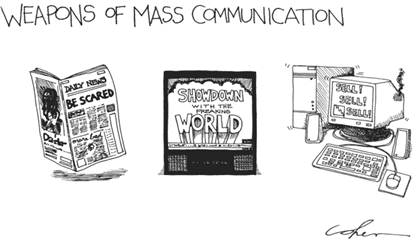
These are only a few statements the journalist wrote in the article to paint a picture of comparing the urgency of voting to life and death, even if a person believes neither candidate represent their values and beliefs. In conclusion, a story can spin many ways based on the writer’s intention. The tools of mass communication such as agenda setting can be used to incite courage, hope, and compassion or fear, doubt, and chaos.
 Mass Communications Theory - Education
